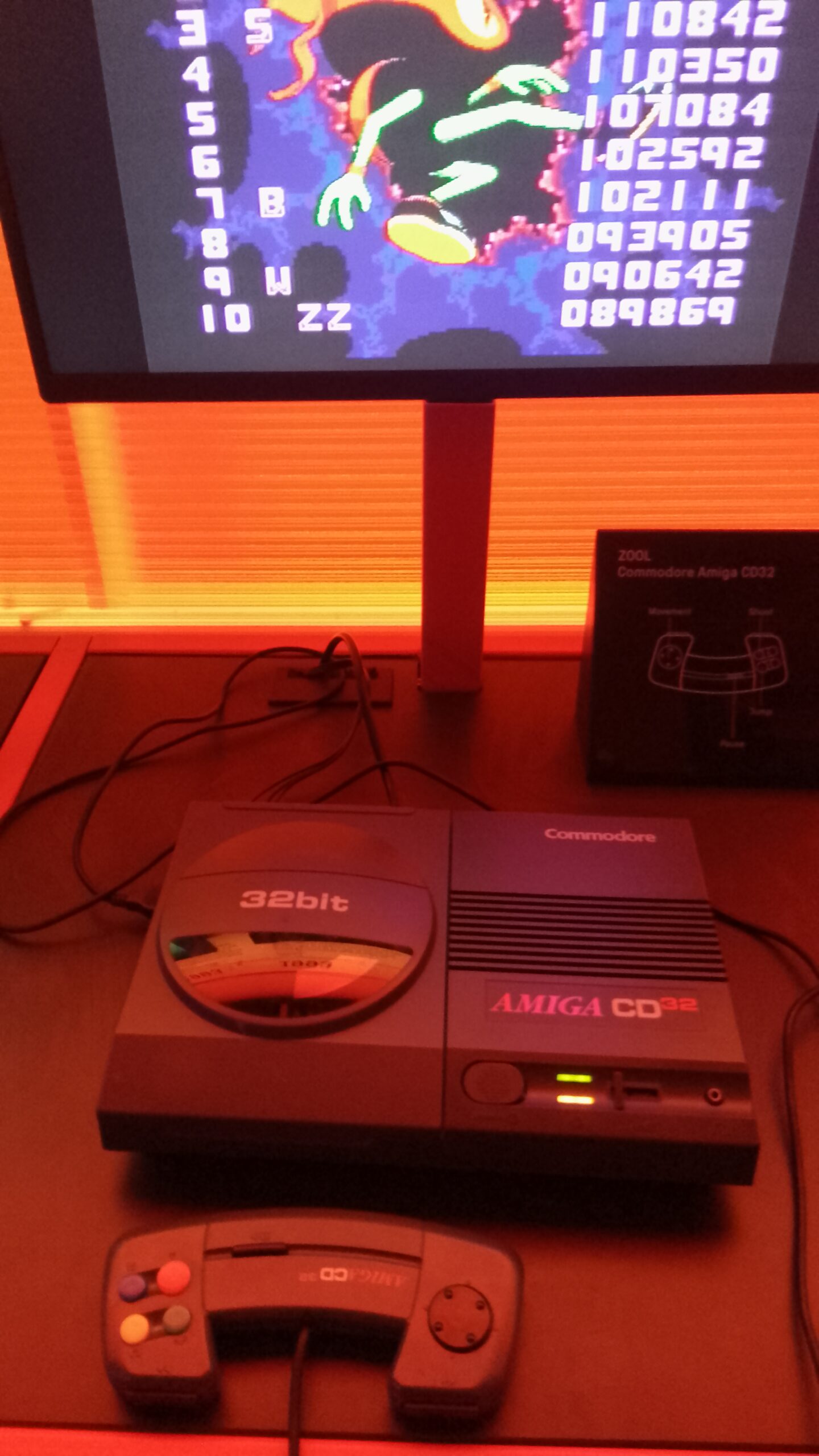
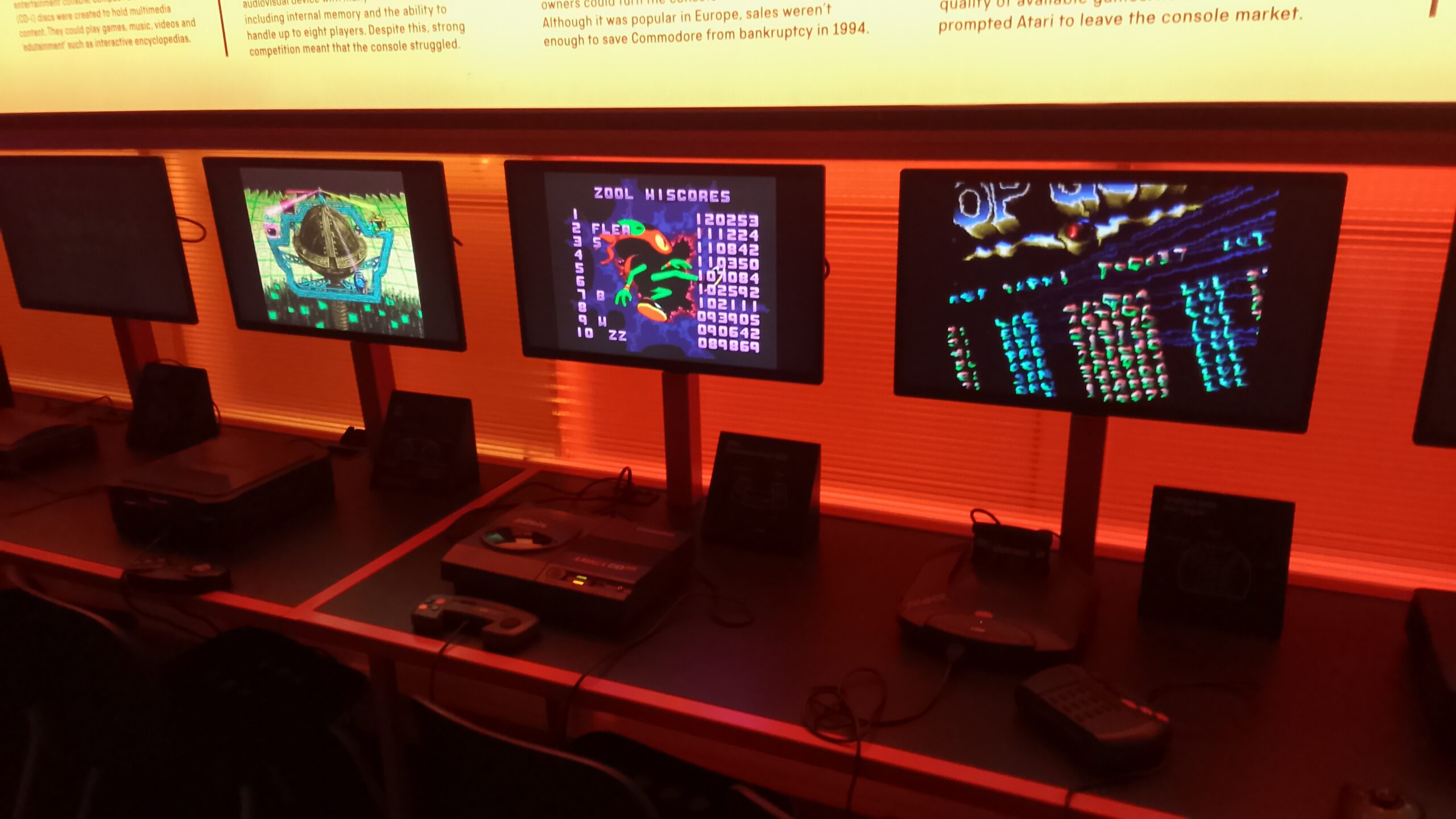
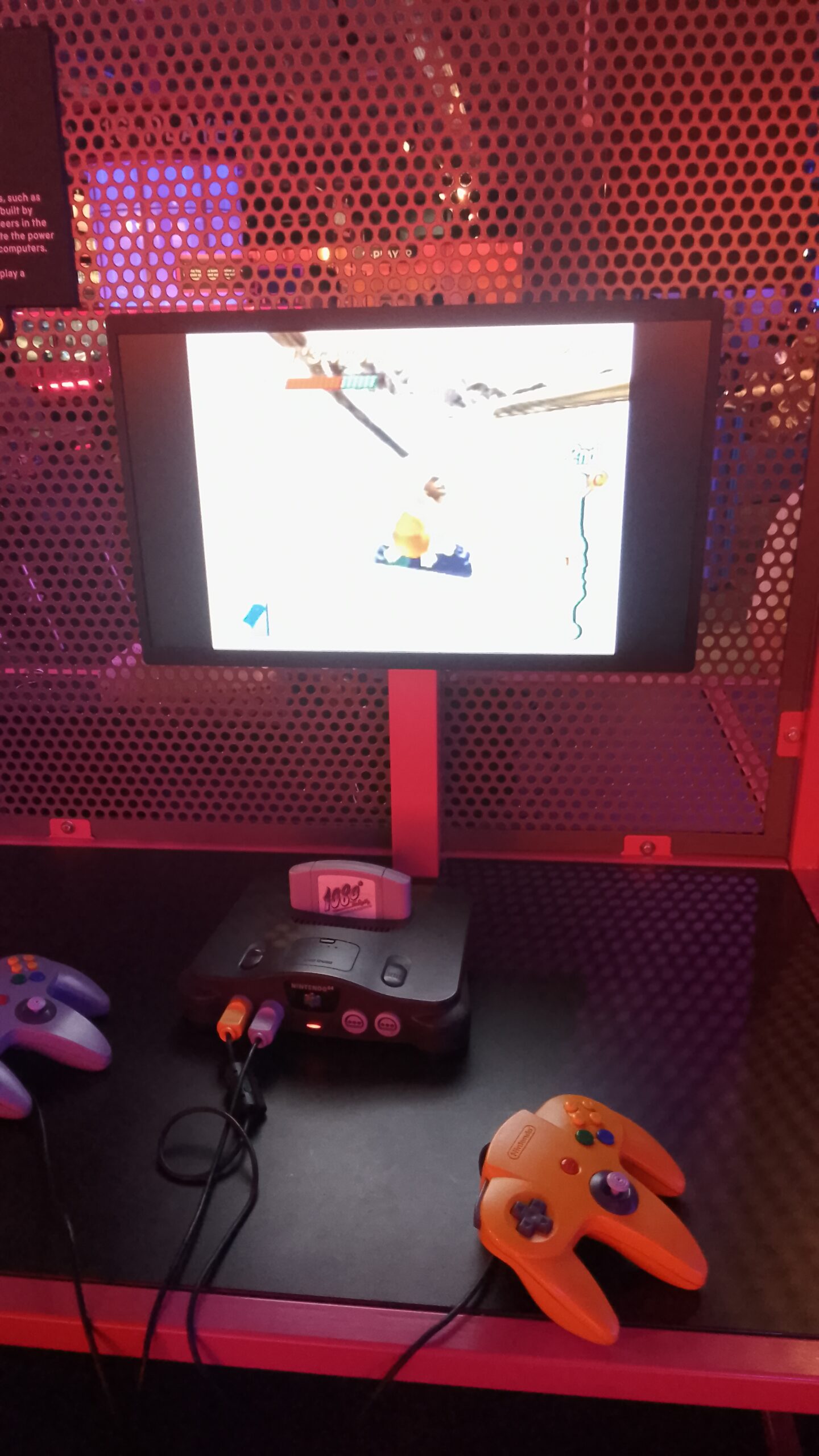
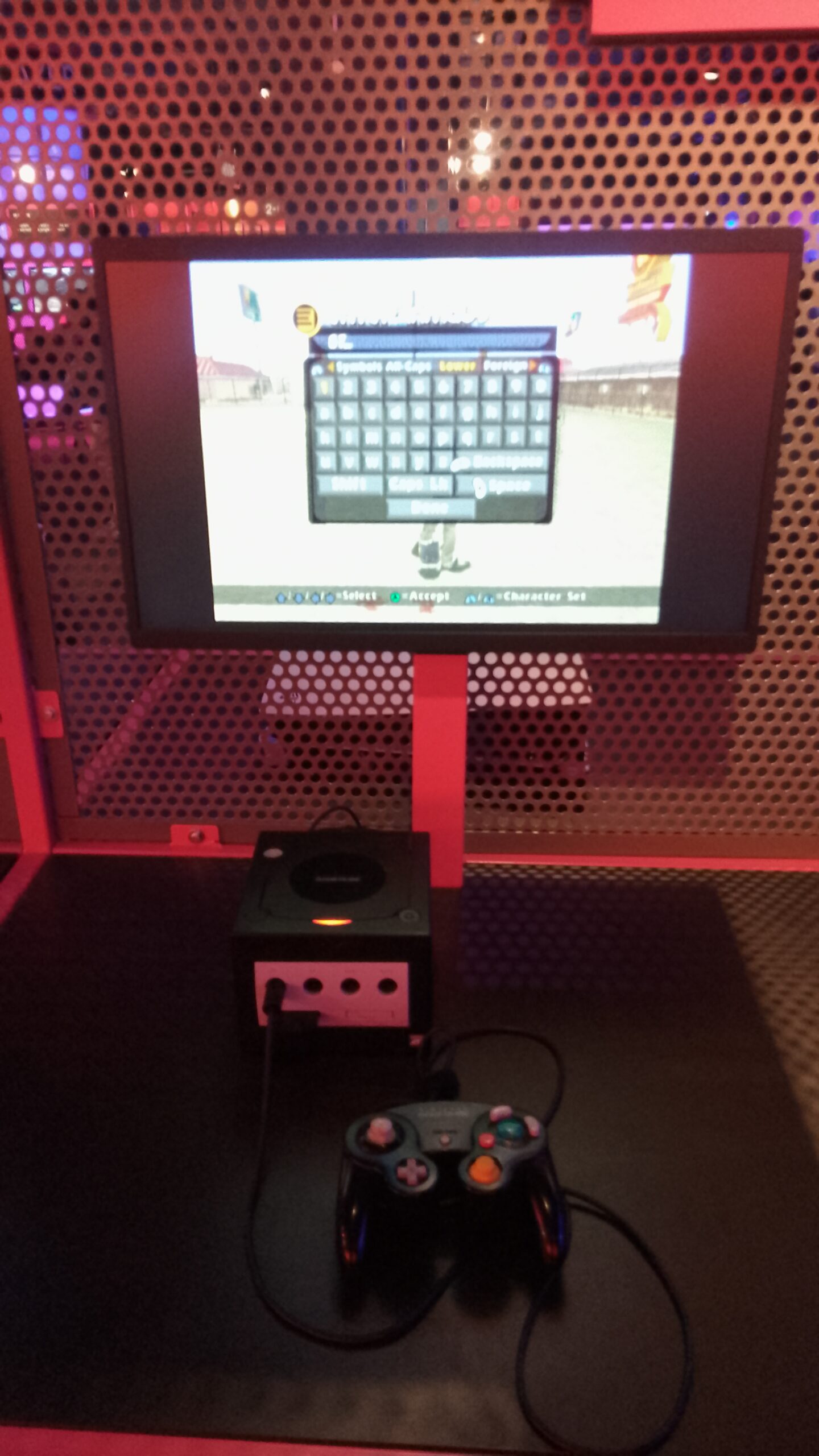
* The photos in this post show consoles of the London Science Museum Power Up.
There’s a special kind of heartbreak in the gaming world. It’s the machine that loads faster, renders smoother, and sounds richer than anything else on the shelf — and still fails. We’ve all owned one. That console you defended at school, the one with the “unfairly overlooked” library, the one that still sits in your closet because you know it was ahead of its time. Today, I want to talk about four of the most powerful, most ambitious, and most heartbreaking failures in gaming history. These are the consoles that had everything except the one thing that mattered: success.
The Amiga CD32: Too Beautiful for This World
Let’s start with the one that still makes European retro gamers tear up. The Amiga CD32, released in September 1993, was the world’s first 32-bit CD-ROM console. Read that again. The world’s first. Before the PlayStation, before the Sega Saturn, there was the CD32, and it was glorious.
Under the hood, the CD32 was essentially an Amiga 1200 computer squeezed into a black console shell. It ran on the AGA chipset, which delivered 256 colors from a palette of 16.7 million, eight hardware sprites, and four audio channels that could play back sampled sound directly from CD. The controller featured a directional pad, six buttons, and even shoulder triggers — a layout that looked eerily similar to what Sony would popularize a year later. The CD drive meant no cartridge limits, no loading screens disguised as gameplay, and full Red Book audio. In 1993, this thing felt like witchcraft.
So why did it fail? The answer is almost sad. Commodore, the company behind the CD32, was already dying. They famously spent more money on the console’s launch party at London’s Kensington Roof Gardens than they did on marketing the actual product. Distribution was a mess — the CD32 launched in the UK and Canada but barely touched the United States. Developers were hesitant to commit to a platform whose parent company was hemorrhaging cash, and the launch library, while featuring gems like Super Stardust and Alien Breed, was thin compared to what Sega and Nintendo offered. By April 1994, Commodore filed for bankruptcy. The CD32 had been on sale for just seven months. It remains one of the great “what ifs” of gaming — what if Commodore had launched a year earlier, or marketed properly, or simply survived long enough to face the PlayStation?
Atari Jaguar: Sixty-Four Bits of Broken Promises
If the CD32 was a beautiful tragedy, the Atari Jaguar was a glorious train wreck you couldn’t look away from. Released in November 1993, the Jaguar was marketed as the world’s first 64-bit console. The slogan was “Do the Math” — as in, 64 bits beats 16 bits (Genesis) and 32 bits (the upcoming 3DO). The math, unfortunately, was deeply misleading.
The Jaguar’s architecture was a nightmare. It used five processing units: a main 32-bit Motorola 68000 (the same chip found in the Amiga and Macintosh), and two 32-bit custom graphics processors that Atari claimed could operate as a single 64-bit unit. Then there were two additional 32-bit chips for sound and memory control. In theory, this made the Jaguar a parallel processing beast. In practice, programming the thing required a computer science degree and a tolerance for pain. Most developers simply ignored the custom chips and ran everything on the old 68000, turning their 64-bit powerhouse into a slightly faster 32-bit console. Early titles like Cybermorph featured flat, textureless polygons and a notorious floating tutorial head that taunted you with “Where did you learn to fly?”
The controller was equally infamous. It looked like a telephone keypad had a violent argument with a calculator. The number pad was almost never used, the D-pad was mushy, and the whole thing was uncomfortably wide. But the Jaguar did have genuine highlights. Tempest 2000 was a masterpiece of vector-style shoot ’em up action, and Alien vs Predator remains one of the most atmospheric first-person shooters of the 16- and 32-bit era, letting you play as Marine, Alien, or Predator in a terrifyingly faithful rendition of the films.
Ultimately, the Jaguar suffered from a tiny library (fewer than 100 games worldwide), terrible third-party support, and the looming shadow of the PlayStation and Saturn. Atari sold the entire stock of unsold Jaguars to a liquidation company in 1996 for $25 per unit. The “64-bit revolution” ended with a whimper.
Nintendo 64: The Cartridge That Sank a Ship
Now we get to the painful one. The Nintendo 64, released in June 1996 in Japan and September 1996 in North America, was not a failure in the commercial sense — it sold nearly 33 million units. But by every other measure, it was a defeat. It lost the console war to the original PlayStation (102 million units) and marked the moment Nintendo stopped being the undisputed king of gaming.
Here’s the tragedy: the N64 was an absolute beast. The 64-bit CPU delivered smooth 3D graphics at a time when the PlayStation was struggling with polygon wobble and texture warping. The Reality Coprocessor, co-developed with Silicon Graphics, enabled features like bilinear filtering (which smoothed out pixelated textures), z-buffering (which prevented objects from clipping through each other), and anti-aliasing (which reduced jagged edges). The analog stick, the Rumble Pak, and the four controller ports were all industry firsts that became standard. And the games? Super Mario 64 redefined 3D movement. The Legend of Zelda: Ocarina of Time is still considered by many to be the greatest game ever made. GoldenEye 007 invented the console first-person shooter. Mario Kart 64 and Super Smash Bros created the party genre.
But the N64 had one fatal flaw, and it came in a plastic box: the cartridge. While Sony was pressing CDs for pennies and shipping hundreds of millions of discs, Nintendo stuck with cartridges for three reasons: fear of piracy (CDs were easy to copy), speed (cartridges had zero load times), and control (Nintendo could charge licensing fees on every cartridge manufactured). The trade-offs were catastrophic. CDs could hold 650MB; N64 cartridges maxed out at 64MB. Final Fantasy VII, one of the biggest games of all time, was originally planned for the N64 but moved to PlayStation because Square Enix couldn’t fit their vision onto a cartridge. The same story repeated with Resident Evil 2, which required a second disc on PlayStation but was crammed onto a single cartridge with compressed video and audio. Developers abandoned the N64 in droves. The console became a haven for first-party Nintendo masterpieces and little else. It won on quality but lost on quantity, and quantity mattered more in the CD era.
GameCube: The Purple Lunchbox That Nobody Bought
If the N64 was a wounded giant, the GameCube was a confused genius. Released in 2001, the GameCube was Nintendo’s response to the PlayStation 2 and the original Xbox. And on paper, it was arguably the most capable of the three. The GameCube’s 485 MHz IBM “Gekko” processor and 162 MHz ATI “Flipper” graphics chip delivered cleaner, more efficient performance than the PS2’s notoriously difficult Emotion Engine. The console was whisper quiet, incredibly reliable, and featured a tiny 8cm optical disc format that loaded faster than DVDs. The controller, with its octagonal gate around the analog stick and the giant green A button surrounded by smaller buttons, remains one of the most comfortable and beloved designs in history.
The games were extraordinary. Super Mario Sunshine, The Legend of Zelda: The Wind Waker (with its controversial cel-shaded art that has aged like fine wine), Metroid Prime (a flawless transition of a 2D franchise into 3D), Resident Evil 4 (which was a GameCube exclusive for nearly a year), Super Smash Bros Melee (still played competitively two decades later), and Eternal Darkness: Sanity’s Requiem (a cult classic horror game that literally messed with the player’s mind). The GameCube had soul, personality, and a library that punches far above its weight.
So why did it fail? Three reasons, all of them painful. First, the mini-disc format. Nintendo learned nothing from the N64 cartridge disaster. The GameCube’s 8cm discs held just 1.5GB, compared to the PS2’s DVD which held 4.7GB (and could play movies). Developers once again struggled to fit their games onto Nintendo’s proprietary format, and the console’s inability to play DVDs meant it couldn’t double as a budget home theater player — a key selling point that helped the PS2 dominate.
Second, the purple lunchbox. The GameCube’s design was aggressively cute, with a handle on the back, a pop-out carrying handle, and that iconic indigo color. It looked like a toy. The PS2 and Xbox looked like serious entertainment hardware. Perception matters, and the GameCube was perceived as “kiddie” at a time when the average gamer age was climbing into the twenties.
Third, and most painfully, Nintendo lost third-party support. The N64 era had already driven away Square Enix, Capcom, and most of the major RPG developers. The GameCube failed to win them back. EA Sports, the biggest third-party publisher in the world, famously demanded that Nintendo allow online play and DVD playback before committing to the platform. Nintendo refused. EA released scaled-down versions of their games for the GameCube and focused their attention on the PS2. By 2003, the GameCube was selling fewer units than the original Xbox, and Nintendo was officially in third place for the only time in its history.
The Silver Lining
Here’s the thing about all four of these consoles. They failed in the market, but they succeeded in influencing everything that came after. The CD32 proved that CD-ROM gaming was viable and directly inspired the PlayStation, which began life as a CD-ROM add-on for the SNES. The Jaguar’s parallel processing experiments paved the way for multi-core CPUs in modern consoles. The N64’s analog stick, rumble feedback, and four-player focus became industry standards. And the GameCube’s controller design lives on in the Switch Pro Controller, while its library of first-party exclusives is being rediscovered and celebrated by a new generation of players.
So pour one out for the underdogs. The beautiful failures. The consoles that aimed too high, launched too late, or made one fatal design choice that overshadowed everything else. They lost the war, but they won our hearts. And isn’t that what retro gaming is really about?

