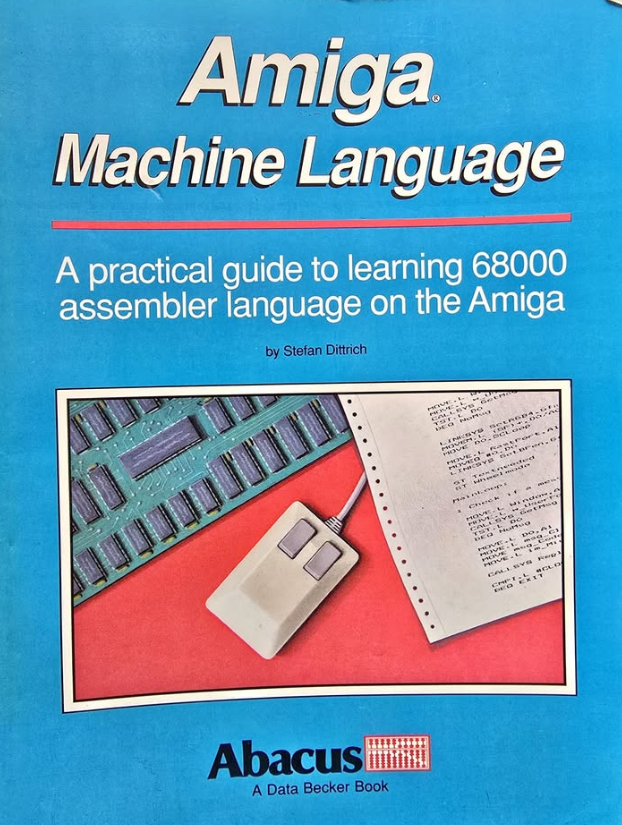
The Motorola 68000 processor holds a special place in gaming history. It powered the Commodore Amiga, the Atari ST, the Sega Genesis (Mega Drive), and a host of arcade machines from Capcom, SNK, and others. For a generation of game developers, the 68000 was the engine that brought their creations to life—a processor that was powerful enough to do remarkable things yet approachable enough that a dedicated programmer could truly understand it.
Programming the 68000 for games was a unique discipline, one that demanded intimate knowledge of the hardware, a willingness to get close to the metal, and a deep appreciation for efficiency. This is how they did it.
Why the 68000?
When Motorola released the 68000 in 1979, it was a revelation. Unlike the 8-bit processors that dominated the era—the Zilog Z80 and MOS Technology 6502—the 68000 was a true 16/32-bit design with a clean, orthogonal instruction set. It featured 16 general-purpose registers, a flat memory model, and a linear address space that could handle up to 16 megabytes of memory.
For game developers, this was liberating. The 6502 and Z80 had limited registers and required constant juggling of data. The 68000 let you work more naturally. Its instruction set was logical and consistent, and its 32-bit registers meant you could manipulate larger values without breaking them into pieces.
The processor also offered a balance of power and cost that made it attractive for home computers and consoles. It was fast enough to handle complex arcade games yet affordable enough to put in consumer hardware. By the mid-1980s, the 68000 had become the processor of choice for high-end gaming platforms.
The Development Environment
Programming the 68000 for games required a specific set of tools. In the early years, development happened on the target hardware itself or on larger minicomputers. As the ecosystem matured, cross-development became the standard.
Assemblers
The primary tool for 68000 game development was the assembler. While C compilers existed and were used for some projects, assembly language dominated the industry well into the 1990s. Performance was everything, and assembly gave developers complete control.
Popular assemblers included:
-
Devpac for the Amiga became the industry standard, offering an integrated editor, assembler, linker, and debugger. Its popularity stemmed from its speed and its ability to handle large projects.
-
SEKA was another Amiga assembler, favored by some developers for its simplicity and its built-in monitor for debugging.
-
SNASM (SN Systems Assembler) became the tool of choice for console development, particularly for the Sega Genesis and later the PlayStation. SN Systems provided professional-grade development kits that included assemblers, linkers, and debugging hardware.
-
ASM-One was a later Amiga assembler that gained a following among hobbyists and some commercial developers for its intuitive interface and powerful macro system.
Development Hardware
Professional game development required more than just software. Developers used specialized hardware to test their code on real consoles and arcade boards.
For the Sega Genesis, developers typically used a development unit that connected to a PC via serial cable. Code was assembled on a PC, transferred to the development unit, and run on the actual console hardware. This process was slow—transfers could take minutes—but it was the only way to test on real hardware.
Arcade developers often worked directly on the target hardware, using in-circuit emulators that allowed them to halt execution, inspect memory, and debug in real time. These tools were expensive but essential for the tight deadlines of arcade game development.
On the Amiga and Atari ST, developers could assemble and test directly on the target machine. Many commercial games were developed entirely on Amiga systems, using assemblers like Devpac and running the code immediately on the same hardware.
The Assembly Language Experience
Writing 68000 assembly was a fundamentally different experience from modern programming. Where today’s developers work with abstractions—frameworks, engines, high-level languages—68000 programmers worked directly with registers, memory addresses, and processor cycles.
Registers: The Programmer’s Workspace
The 68000 had 16 general-purpose registers, each 32 bits wide. They were divided into data registers and address registers. Data registers, labeled D0 through D7, were used for arithmetic, logic operations, and temporary storage. Address registers, labeled A0 through A7, held memory addresses.
A typical operation might move a value into a data register, perform some arithmetic, then store the result into memory using an address register. The programmer had to track which register held what at all times, and managing these registers effectively was a core skill.
The Instruction Set
The 68000’s instruction set was remarkably consistent. Instructions followed a pattern: a mnemonic for the operation followed by the source and destination operands. For example:
-
MOVE.L D0, D1moved a longword (32 bits) from D0 to D1 -
ADD.W #10, D0added the immediate value 10 to the low word of D0 -
MOVE.B (A0), D0moved a byte from the memory address pointed to by A0 into D0 -
LEA MyVariable, A0loaded the effective address of MyVariable into A0
The processor supported multiple addressing modes, allowing programmers to access memory in various ways: direct, indirect, with displacement, with indexing, and more.
Writing Code
A 68000 assembly program was structured as a series of instructions, each on its own line. Labels marked locations in the code, typically used for subroutines and branching. Comments followed semicolons, explaining what the code was doing—essential documentation when you were working at this level.
The programmer had to manage everything manually. There was no automatic memory management, no garbage collection, no safety checks. A bug could easily crash the entire machine. This required a meticulous approach and a deep understanding of the hardware.
Working with Hardware
Games needed to interact with custom hardware: graphics chips, sound processors, input devices. On each platform, this meant working with memory-mapped registers.
Memory-Mapped I/O
Most 68000-based systems used memory-mapped I/O, meaning that hardware registers appeared as specific memory addresses. Writing to these addresses would control the hardware, reading from them would return status information.
On the Sega Genesis, for example, the Video Display Processor was controlled by writing to specific memory addresses. A programmer might write:
This single instruction would write a value to a VDP register, perhaps setting the display mode or the background color. Understanding these registers was essential; developers worked with hardware documentation that listed every register and its function.
Interrupts and Timing
Games needed to run at consistent frame rates, typically 50 or 60 frames per second depending on the region. The 68000 supported interrupt handling, and game loops were often driven by the vertical blank interrupt—a signal that occurred when the display was between frames.
During the vertical blank, the programmer had a brief window—a few thousand cycles—to update graphics registers, copy data to video memory, and prepare the next frame. Missing this window could cause screen tearing or other visual glitches. Managing timing was a constant concern.
The Blitter and Copper
On the Amiga, programmers worked with the custom chipset, particularly the blitter and the copper. The blitter was a dedicated chip that could copy and manipulate blocks of graphics data faster than the CPU could manage. Programmers would set up blitter registers to perform operations, then let the chip work while the CPU handled other tasks.
The copper was even more sophisticated. It was a simple coprocessor that could execute a small program in sync with the video display. Programmers used the copper to change colors mid-screen, create split-screen effects, and perform synchronized operations that would have been difficult to manage with the CPU alone.
Optimization: Squeezing Every Cycle
Performance was never optional in 68000 game development. The processor ran at speeds that seem glacial by modern standards—7 MHz on the Amiga and Genesis, 8 MHz on the Atari ST. Every cycle mattered.
Register Management
One of the most important optimizations was keeping frequently used values in registers. Accessing memory was much slower than accessing registers, so skilled programmers structured their code to minimize memory access. They would load values into registers at the start of a routine and keep them there for as long as possible.
Unrolling Loops
Loop overhead was a significant cost. Programmers often unrolled loops, writing the same instructions multiple times in sequence rather than using a counter and a branch. This made the code larger but significantly faster.
Using the Right Instructions
Some instructions were faster than others. For example, MOVEQ (move quick) was a single-cycle instruction that could load small constants into a register, much faster than a general MOVE. Programmers learned the timing of each instruction and chose the most efficient ones for critical code paths.
Self-Modifying Code
In extreme cases, programmers used self-modifying code—code that altered its own instructions at runtime. This technique was used to create dynamic jump tables or to optimize frequently executed operations. It was powerful but dangerous, and it required an even deeper understanding of the processor.
From Assembly to C: A Gradual Shift
While assembly dominated the 68000 game industry for many years, C compilers gradually became more common. The quality of 68000 C compilers improved throughout the 1990s, and the increasing complexity of games made assembly-only development less practical.
Many projects used a hybrid approach. Critical routines—like graphics rendering, sound mixing, and core game loops—were written in assembly. The rest of the game, including game logic, AI, and menu systems, was written in C. This allowed developers to get the performance they needed where it mattered while improving productivity elsewhere.
The SN Systems development kits for the Sega Genesis and PlayStation supported both C and assembly, and many developers adopted this hybrid model.
The Legacy
The skills learned by 68000 game developers were transferable and valuable. Programmers who cut their teeth on the 68000 found that they understood computer architecture at a deep level. They understood what was happening under the hood of higher-level languages. They understood the importance of efficiency.
When 3D consoles arrived—the Sony PlayStation, the Sega Saturn, the Nintendo 64—many of the same developers were there, applying the lessons they had learned. The PlayStation used a custom RISC processor, but the principles of close-to-the-metal programming remained the same.
Today, the 68000 lives on. The processor is still used in embedded systems, and its architecture is taught in computer science courses as an example of clean, orthogonal design. A community of enthusiasts continues to develop new games for the Amiga, the Genesis, and other 68000-based platforms, keeping the knowledge alive.
A Different Kind of Programming
Programming the 68000 for games was a discipline that required patience, precision, and a willingness to understand systems at their lowest level. There were no layers of abstraction to hide the complexity. There were no engines to handle the heavy lifting. There was just the programmer, the processor, and a set of hardware registers waiting to be controlled.
For those who mastered it, the 68000 offered something that is harder to find in modern development: a complete understanding of the machine. You knew exactly what every instruction did. You knew how many cycles it took. You knew where every byte of memory was. And when your game ran smoothly at 60 frames per second, scrolling flawlessly across the screen, you knew that you had earned it.
It was a different era. But for those who lived it, the 68000 remains a processor that felt less like a chip and more like a collaborator—a partner in the difficult, rewarding work of making machines do things they had never done before.

