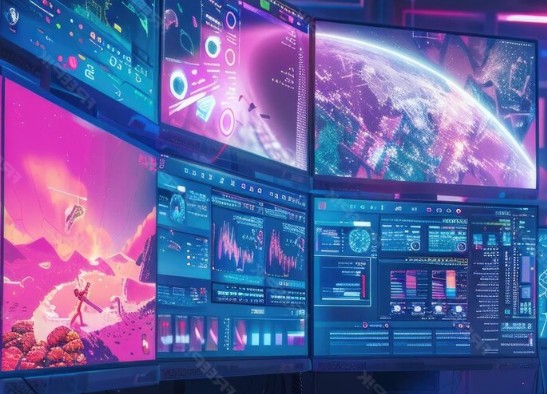
The conversation around AI in gaming has shifted dramatically. Just a year ago, it was an experimental novelty. Today, it has become the undeniable centerpiece of the industry’s future. At the recent 2026 Game Developers Conference, AI wasn’t just a trending topic; it was the core thesis, with AI-related sessions more than doubling from the previous year. We are witnessing a pivotal moment where artificial intelligence is moving from the sidelines to fundamentally reshape how games are built, played, and experienced.
From Experiment to Engine: The New Industrial Revolution
The overarching theme from industry leaders is clear: AI is no longer a prototype searching for a problem. It has entered a phase of mass production and implementation. According to recent industry data, the vast majority of gaming executives believe AI will transform their industry, but the conversation has evolved from abstract potential to concrete, scalable solutions.
This shift is driven by an existential economic crisis. As one industry director put it, studios are facing a completely broken model where development costs are doubling, yet they are competing for less than half of global player playtime. AI is now being positioned not as a replacement for human creativity, but as the suit that gives developers the superpowers needed to survive and thrive. This means automating the tedious, repetitive tasks that bog down creative teams, allowing them to focus on what they do best: making great games.
AI as the Ultimate Co-Developer: Supercharging Production Pipelines
One of the most significant breakthroughs is the move from simple prompt-and-output tools to sophisticated, multi-agent systems that manage entire production workflows.
The Agentic Workflow
Several startups are leading this charge with platforms that act as autonomous workflow builders. Instead of a single AI generating a flawed 3D model, a team of specialized AI agents now collaborates to handle generation, texturing, optimization, and engine integration. Artists can simply describe their needs in natural language, and the system assembles a complex pipeline based on how professional studios actually ship games. In closed beta with AAA studios, this approach demonstrated dramatically faster asset creation and significant reductions in per-asset costs, all while maintaining professional quality standards.
Code and Content on Demand
This revolution extends to every corner of development. Major cloud providers report that the vast majority of game companies are already using their services to leverage AI for coding assistance, content generation, localization, and QA testing. Some tools can turn hand-drawn UI sketches directly into HTML code. Meanwhile, major engine developers are set to unveil new AI betas that will enable developers to use natural language to prompt entire casual games into existence, dramatically lowering the barrier to entry for aspiring creators.
However, this doesn’t mean the death of the developer. As one studio CEO explains, AI is not a replacement for human creativity. Instead, teams are teaching AI how they write to help turn creative visions into reality. The goal is augmentation, not automation.
The Living World: AI’s Impact on Player Experience
Beyond the development pipeline, AI is creating game worlds that feel truly alive for the first time. The ultimate promise is hyper-personalization, where the game adapts uniquely to each player.
NPCs with Memory and Personality
We are moving beyond NPCs with pre-scripted, repeating dialogue. Cloud giants are demonstrating database technologies that allow AI characters to possess long-term memory and engage in personalized reactions. These NPCs can remember a player’s past actions and choices, creating a dynamic narrative that evolves over time. The vision of Living Games involves using autonomous AI agents to create responsive, sentient environments that react intelligently to player behavior.
Several developers are already pioneering these concepts at scale. In various online games, AI-driven characters are being deployed. These aren’t simple bots; they are NPCs with distinct personalities that can reason, cooperate, and even betray players, creating social dynamics so rich that players often forget they aren’t interacting with real people. This helps solve a critical online game problem: keeping servers feeling populated and lively at all times.
Business and Live Operations
AI’s influence also extends behind the scenes to improve the player experience indirectly. By unifying data silos, AI can analyze player sentiment and logs to predict when a player is about to quit before it happens, allowing developers to adjust gameplay or offers in real-time to keep them engaged. Furthermore, a surprisingly common and powerful application is in combatting toxicity. With a significant majority of players experiencing toxic behavior, AI moderation tools can detect and react to issues instantly, replacing a manual report system that could take weeks, thus fostering a healthier community.
The Pushback: When AI Meets the Court of Public Opinion
Despite the technological marvels, the path of AI is not without significant friction. The industry is facing a wave of skepticism and outright rejection from both developers and players.
The Backlash
There is a growing disdain for what the community calls low-quality generic content that carries an unmistakable AI smell. This backlash is so severe that AI-generated has become an unpopular label on many platforms. Players feel cheated when they pay full price for a AAA game only to find it filled with thoughtless AI filler. In one notable example, players spotted a generated image of a zombie Santa with six fingers, forcing the studio to apologize and awkwardly reiterate that human artists had final approval.
Developer Skepticism and Ethical Concerns
This sentiment is mirrored by the developers themselves. Recent data shows a notable decline in generative AI adoption over the last year. The number of developers who believe AI will reduce development costs has also fallen, while those who think it will increase costs has jumped. Almost half of surveyed developers worry that AI will negatively impact game quality.
Ethical and legal concerns are also front and center. Issues surrounding copyright infringement, the energy consumption and environmental impact of AI, and the potential for psychological harm to users are all contributing to a steady drumbeat of criticism. Some companies have publicly pledged not to use generative AI in their creative process to protect their intellectual property.
A Tale of Two Industries: The East-West Divide
Interestingly, the reception of AI creates a fascinating geographic divide. In Western markets, where the buy-to-play model dominates, players perceive AI-generated art as a cheapening of a premium product. Announcements of AI tools that can generate playable worlds from images have caused stocks of major publishers to tumble—investors feared the devaluation of high-budget productions.
In contrast, in the Asian market, where free-to-play with in-app purchases is the norm, AI is seen as a value-add. Players embrace AI for creating deeper social interactions and more engaging experiences, which in turn drives player spending and loyalty. Several Asian companies are leading the world in AI application, presenting the most AI-related sessions at recent conferences and integrating the technology into numerous games.
Conclusion
The age of AI in gaming is here, but it is far from a simple, one-dimensional story of robots taking over. We are standing at the precipice of a transformative era. The technology promises to solve the industry’s broken economic model, empower a new generation of creators, and deliver living, breathing worlds that were previously impossible. As one industry veteran predicts, within a few years, every major game genre will be completely transformed by AI, and entirely new genres will emerge.
Yet, the industry must navigate this new frontier with care. The backlash against low-quality AI slop is a warning that technology cannot replace artistry and intent. The path forward is one of augmentation—giving developers a suit of armor, not an army of replacements. The ultimate winners will be those who use AI not as a shortcut, but as a tool to multiply human creativity and craft more meaningful, magical experiences for players around the world.

